Education
Clarence Jefferson (Jeff) Hall Jr. earned a B.A. in History, magna cum laude, from Binghamton University in 2001, where he was also elected to the Psi chapter of Phi Beta Kappa. Supervised by the eminent labor historian Melvyn Dubofsky, he earned an M.A. in U.S. History from Binghamton in 2003. Advised by Christopher Sellers and committee members Robert Chase, Connie Chiang, Donna Rilling, and Nancy Tomes–top scholars in environmental history, carceral studies, and the history of public health and medicine–Jeff earned a Ph.D. in U.S. History, with distinction, from Stony Brook University in 2014. Since 2014, Jeff has served as a full-time faculty member in the Department of History at Queensborough Community College / CUNY.
Research
Jeff’s research investigates the environmental dimensions of carceral systems in the United States in the nineteenth and twentieth centuries. His work draws on the archives of correctional administrators, environmental planners, incarcerated people, ordinary citizens, and activist organizations to uncover how authorities have planned, built, and operated carceral environments. Hall’s first book, A Prison in the Woods: Environment and Incarceration in New York’s North Country, was published by the University of Massachusetts Press in 2020.
Utilizing archival materials previously unavailable to the public, A Prison in the Woods demonstrated how beginning in the mid-nineteenth century, state planners reconfigured New York’s Adirondack Park as a site of incarceration, an instrument of punishment, and an unexpected beneficiary of the state’s sprawling carceral apparatus. In recognition of his scholarly achievements with A Prison in the Woods, the City University of New York awarded Hall the Feliks Gross Endowment Award for Excellence in Scholarly Research in 2021.
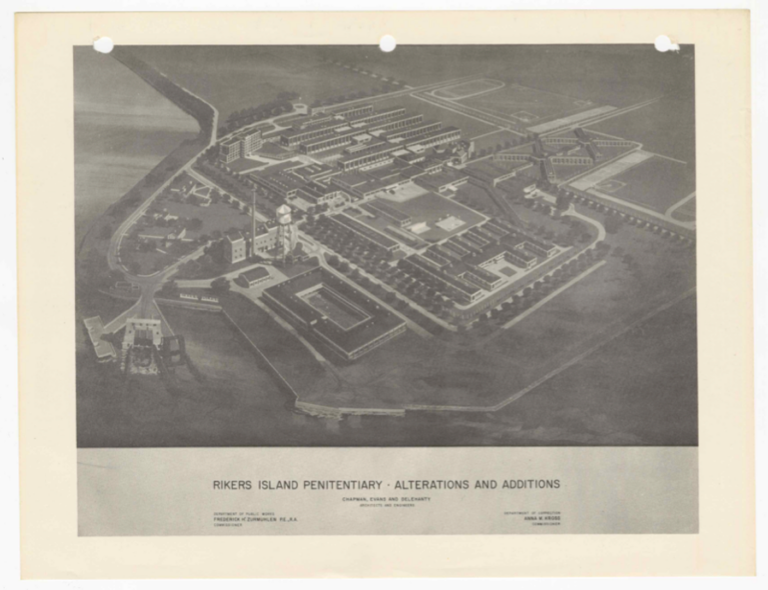
Jeff is currently at work on a new book project tentatively entitled, Rikers Island: An Environmental History. Troubled by the seemingly intractable violence that has long plagued New York City’s largest carceral institution, Hall is investigating how features of the unbuilt and built environment–including major infrastructure–have contributed to unhealthful conditions that have fueled unrest and violence. Support for Rikers Island: An Environmental History, has been provided by the Larry J. Hackman Research Residency at the New York State Archives in Albany, the Loewenstein-Wiener Research Residency at the American Jewish Archives in Cincinnati, and a Cycle 56 (Trad B) Research Award from the Professional Staff Congress (PSC) of CUNY.
Teaching
Jeff’s more than twenty years of teaching experience spans a wide range of academic disciplines, including History, Writing, Journalism, and Environmental Studies. At Queensborough, he regularly teaches both halves of the U.S. History survey, in addition to more specialized elective courses, including Environmental History of North America, History of New York, and the U.S. since 1945. Students in Hall’s courses learn by carefully studying secondary scholarship, rigorously analyzing primary documents, practicing scholarly writing, and participating in classroom discussions and activities. Jeff has learned by experience that students learn best when they are active participants–as opposed to passive spectators–in their own education. Regular classroom interactions also provide opportunities for forging personal bonds that help Jeff–by getting to know his students as people–provide students the individualized support they need to succeed.
Service
Jeff has served in a slew of service roles for Queensborough, the City University of New York, and for a variety of professional organizations and institutions. At Queensborough, he has served as an elected member of the Academic Senate, History Department Personnel and Budget Committee, and Academic Freedom Committee, among many others. He currently serves as the national chair of the Committee on Community Colleges for the Organization of American Historians, and the national chair of the Committee on Diversity, Inclusion, and Equity for the American Society for Environmental History.
Jeff is a member of the scholarly advisory committee for “The Black Experience in the Adirondacks,” a new, permanent exhibition slated to open at the Adirondack Experience: The Museum on Blue Mountain Lake, in 2027. Hall is also honored to serve as a member of the advisory council for the Correctional Association of New York (CANY). Founded in 1844, CANY is New York’s oldest independent prison oversight organization.
Hall has also reviewed article and book manuscripts for a variety of publications and presses, including Abdo Publishing, American Nineteenth Century History, Environment and Planning E: Nature and Space, Environmental History, Journal of Arizona History, Labor Studies Journal, New York History, Routledge, and the University of Washington Press.
Public Engagement
Jeff regularly shares his work with audiences both inside and outside the halls of academia. In addition to presenting research at the annual conferences of the Academy of Leisure Sciences, American Society for Environmental History, New York Historical Association, and Organization of American Historians, he has also engaged with audiences at high schools, colleges and universities, museums, and historical societies across the U.S. Hall has also provided expert analysis on matters related to environment and incarceration for a variety of news media organizations, including CNN, MSNBC, NPR, and The New York Times, among many others.